### About the Authors
Lise Meitner (1878–1968) was an Austrian p...
### TL;DR
This is the paper that named fission and made nuclear ...
The only mechanism anyone could imagine for turning uranium (Z=92) ...
Until 1938, every known nuclear reaction ejected at most an alpha p...
This is the liquid drop model, due to George Gamow (1930) and devel...
Lets try reconstruct the derivation.
Consider a uniformly charge...
When the compound nucleus has just pinched off into 2 fragments, le...
What this paper does not do, and what matters: it does not discuss ...
Heavy nuclei need an excess of neutrons to stay bound against Coulo...

© 1969 Nature Publishing Group

© 1969 Nature Publishing Group
Heavy nuclei need an excess of neutrons to stay bound against Coulomb repulsion; the valley of stability curves away from $N = Z$ toward $N > Z$ as $A$ grows. Uranium has $N/Z \approx 1.59$. Stable barium has $N/Z \approx 1.45$. When a uranium nucleus splits, the fragments inherit uranium's neutron richness — but that is far too many neutrons for their now-smaller $Z$. So they undergo a cascade of $\beta^-$ decays (each converting $n \to p$) until they reach the stability line. This is the paper's prediction of **fission-product decay chains**, which is exactly what Hahn and Strassmann had been observing without understanding.
> "If one of the parts is an isotope of barium, the other will be krypton $(Z = 92 - 56)$..."
Charge conservation. And then they predict the $\mathrm{Kr} \to \mathrm{Rb} \to \mathrm{Sr} \to \mathrm{Y} \to \mathrm{Zr}$ chain — which turned out to be correct, and contains $^{90}\mathrm{Sr}$, the notorious fallout isotope that would haunt atmospheric-testing debates three decades later.
What this paper does not do, and what matters: it does not discuss secondary neutron emission. If the neutron-rich fragments emit extra neutrons in the process, then each fission can trigger more fissions, a chain reaction. That step was taken by Joliot's group in Paris and independently by Szilárd and Zinn at Columbia in March 1939. Meitner and Frisch wrote this paper in late December 1938; chain reactions were not yet on the table. But you can see the entire edifice of nuclear weapons and nuclear power looming in the gap between this paper and the next three months of work.
### About the Authors
Lise Meitner (1878–1968) was an Austrian physicist who had spent three decades at the Kaiser Wilhelm Institute in Berlin as Otto Hahn's theoretical partner. She led the physics side; Hahn led the radiochemistry. By 1938 she was one of the most respected nuclear physicists in Europe - Einstein privately called her "our Madame Curie"
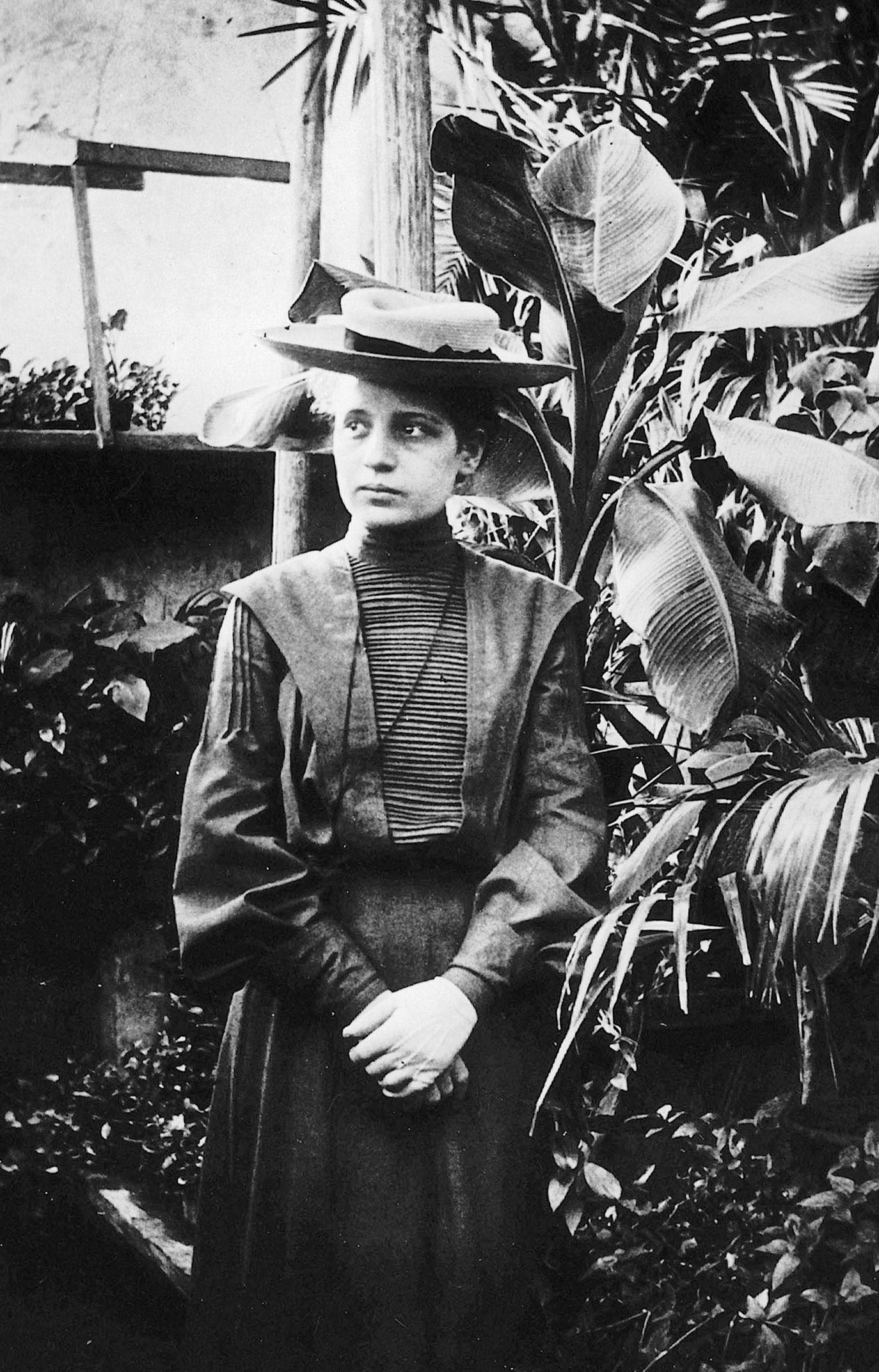
Otto Robert Frisch (1904–1979) was her nephew. He was an experimentalist working at Niels Bohr's Institute in Copenhagen, and he would later co-author the Frisch–Peierls memorandum (1940), the 2-page document that convinced the British government an atomic bomb was feasible and kick-started what became the Manhattan Project.

The paper you are reading was "conceived" on a walk in the snow near Kungälv, Sweden, over Christmas 1938. Meitner had just received a panicked letter from Hahn (dated December 19, 1938) describing his and Fritz Strassmann's chemical result: neutron-bombarded uranium seemed to produce barium. Hahn wrote, essentially, "as chemists we must conclude that these are barium isotopes, but as physicists we cannot bring ourselves to announce it". When Frisch arrived for the holiday he went on a walk with his aunt and worked out the physics on scraps of paper. By the time the walk ended, they had a theory for fission.
The word "fission" itself does not appear in the paper's title. Frisch came up with it when he returned to Copenhagen, after consulting the American biologist William Arnold, who told him that cell division in biology is called binary fission. Its first appearance anywhere in print as a physics term is in this paper, in quotation marks, "the whole 'fission' process". That nervous quoting is the birth of the word.
Hahn and Strassmann won the 1944 Nobel Prize in Chemistry for the discovery, and Meitner was excluded. It is widely regarded as one of the worst omissions in Nobel history. You are reading the paper that should have shared that prize.
### TL;DR
This is the paper that named fission and made nuclear reactors and weapons conceivable within a matter of weeks.
Uranium bombarded with neutrons had been producing a zoo of radioactive products that everyone (including Meitner herself) had been labeling as "transuranic" elements heavier than uranium. Then in December 1938, Hahn and Strassmann showed chemically that one of the products was barium, element 56, roughly half the size of uranium. Physically impossible under every known nuclear process.
In this paper, the authors treat the nucleus as a charged liquid drop: Surface tension wants it spherical; Coulomb repulsion wants to tear it apart.
For a nucleus as heavy as uranium, the 2 forces are nearly balanced, so the small jolt from neutron capture is enough to make the drop deform, pinch, and split into two comparable fragments. They named this process "fission" borrowing the word from cell biology.
Until 1938, every known nuclear reaction ejected at most an alpha particle (Z=2). So the space of possible products was extremely narrow: Z could change by ±2 at most per decay or reaction.
The only mechanism anyone could imagine for turning uranium (Z=92) into barium (Z=56) at the time was to eject many alpha particles and/or protons (at least 18 units of charge).
Each ejection requires a particle to tunnel out through the Coulomb barrier. George Gamow's 1928 theory of alpha decay gave the tunneling probability as roughly
$$
P \sim exp(\frac{2 \pi Z_1Z_2 e^2}{\hbar v})
$$
v is the velocity of the emerging particle. The exponent is huge, and the probability of emitting many such particles in cascade is very small.
So nobody took the "many light particles" channel seriously, which made the Hahn–Strassmann result look impossible on physical grounds.
This is the liquid drop model, due to George Gamow (1930) and developed by Niels Bohr (1936).
The physical picture: nucleons in a heavy nucleus are packed so densely and interact so strongly that they behave collectively, like molecules in a liquid, rather than independently. Surface tension emerges because nucleons on the surface have fewer neighbors just like water molecules. Crucially, a liquid drop can deform and, if deformed enough, pinch off into two drops. This is the mechanism Meitner and Frisch are proposing for the nucleus.
When the compound nucleus has just pinched off into 2 fragments, lets treat them as touching, uniformly charged spheres with charges $Z_1 e$ and $Z_2 e$, and radii $R_i = r_0 A_i^{1/3}$. Their Coulomb potential energy at the moment of scission is
$$
V_C = \frac{Z_1 Z_2 e^2}{4\pi \varepsilon_0 (R_1 + R_2)}
$$
Using $ke^2 = 1.44 \,\text{MeV}\cdot\text{fm}$ and $r_0 \approx 1.2 \,\text{fm}$, take a barium + krypton split:
- $Z_1 = 56$, $A_1 \approx 140$
- $Z_2 = 36$, $A_2 \approx 94$
Then
- $R_1 \approx 6.25 \,\text{fm}$
- $R_2 \approx 5.47 \,\text{fm}$
so
$$
V_C \approx \frac{56 \cdot 36 \cdot 1.44 \,\text{MeV}\cdot\text{fm}}{11.7 \,\text{fm}} \approx 248 \,\text{MeV}
$$
With the larger nuclear radius constant Meitner and Frisch would have used in 1939 (closer to $r_0 \approx 1.5 \,\text{fm}$), this comes down to about $200 \,\text{MeV}$. All of this potential energy converts into kinetic energy as the fragments fly apart. That is the famous **200 MeV per fission**.
Then they cross-check it a different way:
> "This amount of energy may actually be expected to be available from the difference in packing fraction between uranium and the elements in the middle of the periodic system."
"Packing fraction" is Aston's 1927 quantity
$$
P = \frac{M - A}{A}
$$
(in atomic mass units), which is essentially the modern binding-energy-per-nucleon curve turned upside down.
Uranium sits at about $7.6 \,\text{MeV}/\text{nucleon}$ binding; the Ba/Kr region sits at about $8.5 \,\text{MeV}/\text{nucleon}$. The difference, $0.9 \,\text{MeV}/\text{nucleon}$, times 236 nucleons, gives roughly
$$
210 \,\text{MeV}
$$
Two *completely independent* calculations (Coulomb repulsion of fragments; mass defect of reactants and products) converge on the same $200 \,\text{MeV}$. That is deeply reassuring, and it is the first place in the paper where the theoretical picture really clicks into place.
> "...without having to consider quantum-mechanical 'tunnel effects', which would actually be extremely small, on account of the large masses involved."
Because the fragments are so massive (compared to an alpha particle), their de Broglie wavelengths are small and tunneling through the fission barrier is exponentially suppressed relative to alpha tunneling.
So fission proceeds essentially by **classical barrier passage** the compound nucleus oscillates with enough amplitude to get over the top rather than barrier tunneling.
(Spontaneous fission, where the nucleus starts in the ground state, *does* require tunneling and is therefore extraordinarily rare, with U-238 spontaneous-fission half-life $\sim 10^{16}$ years.)
Lets try reconstruct the derivation.
Consider a uniformly charged liquid drop. Its total energy has 2 competing terms: 1) a surface term that stabilizes spherical shape, and 2) a Coulomb term that wants to push the charge apart. In the **semi-empirical mass formula** these are:
$$
E_S = a_S A^{2/3}, \qquad E_C = a_C \frac{Z^2}{A^{1/3}}
$$
with $a_S \approx 17 \,\text{MeV}$ and $a_C \approx 0.7 \,\text{MeV}$ in modern units.
Now deform the sphere into an ellipsoid of revolution, keeping volume fixed, with a small deformation parameter $\varepsilon$ (so the semi-axes become $a = R(1+\varepsilon)$ and $b=c=R(1+\varepsilon)^{-1/2}$). To second order in $\varepsilon$:
$$
E_S(\varepsilon) \approx E_S^{(0)}\left(1+\frac{2}{5}\varepsilon^2\right)
$$
$$
E_C(\varepsilon) \approx E_C^{(0)}\left(1-\frac{1}{5}\varepsilon^2\right)
$$
The change in total energy from deformation is
$$
\Delta E = \frac{\varepsilon^2}{5}\left(2E_S^{(0)} - E_C^{(0)}\right)
$$
A sphere is stable against small deformations as long as $\Delta E > 0$, i.e.,
$$
2E_S^{(0)} > E_C^{(0)}
$$
Plugging in:
$$
2a_S A^{2/3} > a_C \frac{Z^2}{A^{1/3}}
\Longleftrightarrow
\frac{Z^2}{A} < \frac{2a_S}{a_C} \approx 49
$$
This quantity $Z^2/A$ is called the **fissility parameter**. When it exceeds about 49, the nucleus has *no barrier at all* against spontaneous fission — the "surface tension" has effectively gone to zero.
For uranium-238,
$$
Z^2/A = \frac{92^2}{238} \approx 35.5
$$
below critical, but not by much.
For a hypothetical nucleus with $Z \approx 100$ and $A \approx 250$,
$$
Z^2/A \approx 40
$$
for $Z=120$, $A \approx 300$,
$$
Z^2/A \approx 48
$$
approaching the critical value.
That is where Meitner and Frisch's "order of 100" estimate comes from. Modern calculations with realistic nuclear surface stiffness put the limit closer to $Z \approx 104\text{–}110$ for the island of instability, which is remarkably close to their back-of-the-envelope figure.
Uranium sits on the edge of stability. It is not quite unstable to deformation on its own, but add a neutron's worth of excitation energy (about 6.5 MeV for U-235 capturing a thermal neutron) and it push it over the barrier.